Kazuyo Sejima
Born: 1956 | Hitachi, Ibaraki Prefecture, Japan
Practice: Kazuyo Sejima & Associates (1987-1995), SANAA (1995 – )
Partner: Ryue Nishizawa
Awards: Rolf Schock Prize (2005), Pritzker Prize (2010), RIBA Royal Gold Medal (2025)
Projects: Christian Dior Building, Serpentine Gallery Pavilion (2009), EPFL Learning Center Lausanne, Sumida Hokusai Museum
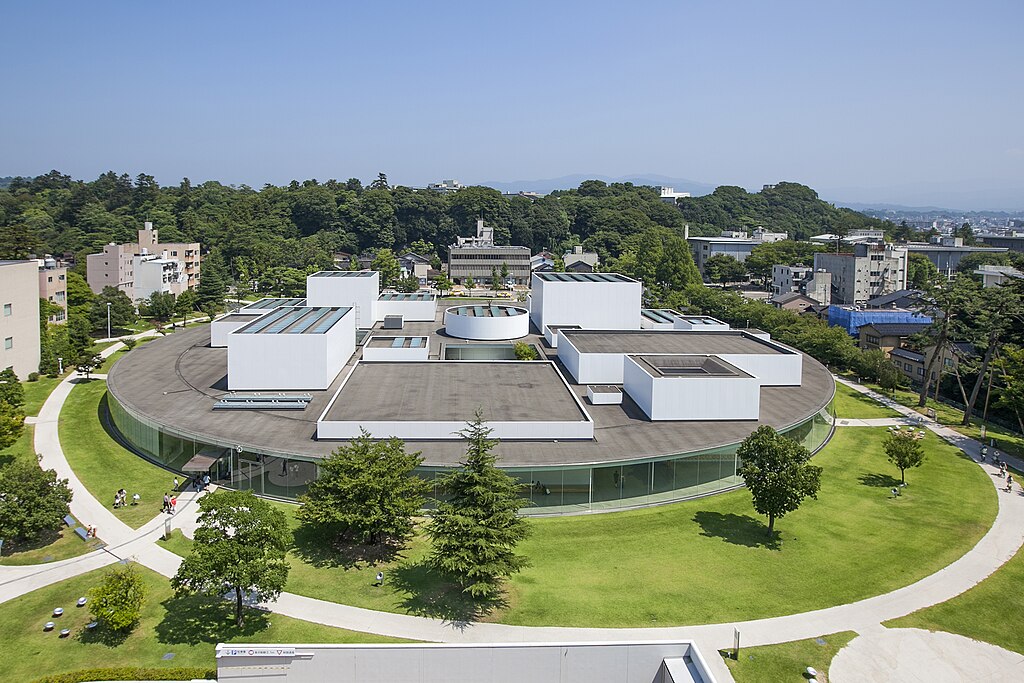
21st Century Museum of Contemporary, Kanazawa, Japan (2004)
Kazuyo Sejima, a prominent figure in modern architecture, has made a significant impact with her distinctive approach to design. Born on October 29, 1956, in Mito, Ibaraki, Japan, Sejima pursued her architectural education at Japan Women’s University, graduating in 1979. Her journey in architecture began at Toyo Ito & Associates, where she honed her skills before establishing her own practice, Kazuyo Sejima & Associates, in 1987.
Sejima’s work is characterized by its minimalist aesthetic, innovative use of materials, and sensitivity to the environment. She often employs glass and metal, creating structures that are not only functional but also visually stunning, blurring the boundaries between interior and exterior spaces. Her designs are known for their clean lines, transparency, and lightness, reflecting a deep understanding of the relationship between space and human interaction.
In 1995, Sejima partnered with Ryue Nishizawa to form the Tokyo-based architectural firm SANAA (Sejima and Nishizawa and Associates). This collaboration marked a significant phase in her career, as SANAA became renowned for its unique architectural language that combines simplicity with an innovative approach to space and form. Their notable works include the Rolex Learning Center in Switzerland, the 21st Century Museum of Contemporary Art in Kanazawa, Japan, and the Louvre-Lens Museum in France.
Sejima’s contributions to the field have been recognized with numerous awards and accolades, including the prestigious Pritzker Architecture Prize in 2010, which she received jointly with Nishizawa. This accolade acknowledged not just her individual achievements but also the impact of her collaboration with Nishizawa in pushing the boundaries of contemporary architecture.
Throughout her career, Sejima has also been involved in academia, sharing her knowledge and insights with the next generation of architects. Her influence extends beyond her buildings; it is seen in her role as an educator and a role model, especially for women in architecture.
Kazuyo Sejima’s approach to architecture challenges conventional notions of space and form, making her one of the most influential architects of the modern era. Her work is a testament to the power of minimalist design in creating spaces that are both functional and aesthetically profound.